Sound
Does it do something useful, musical, or hard to fake?
About Alludio
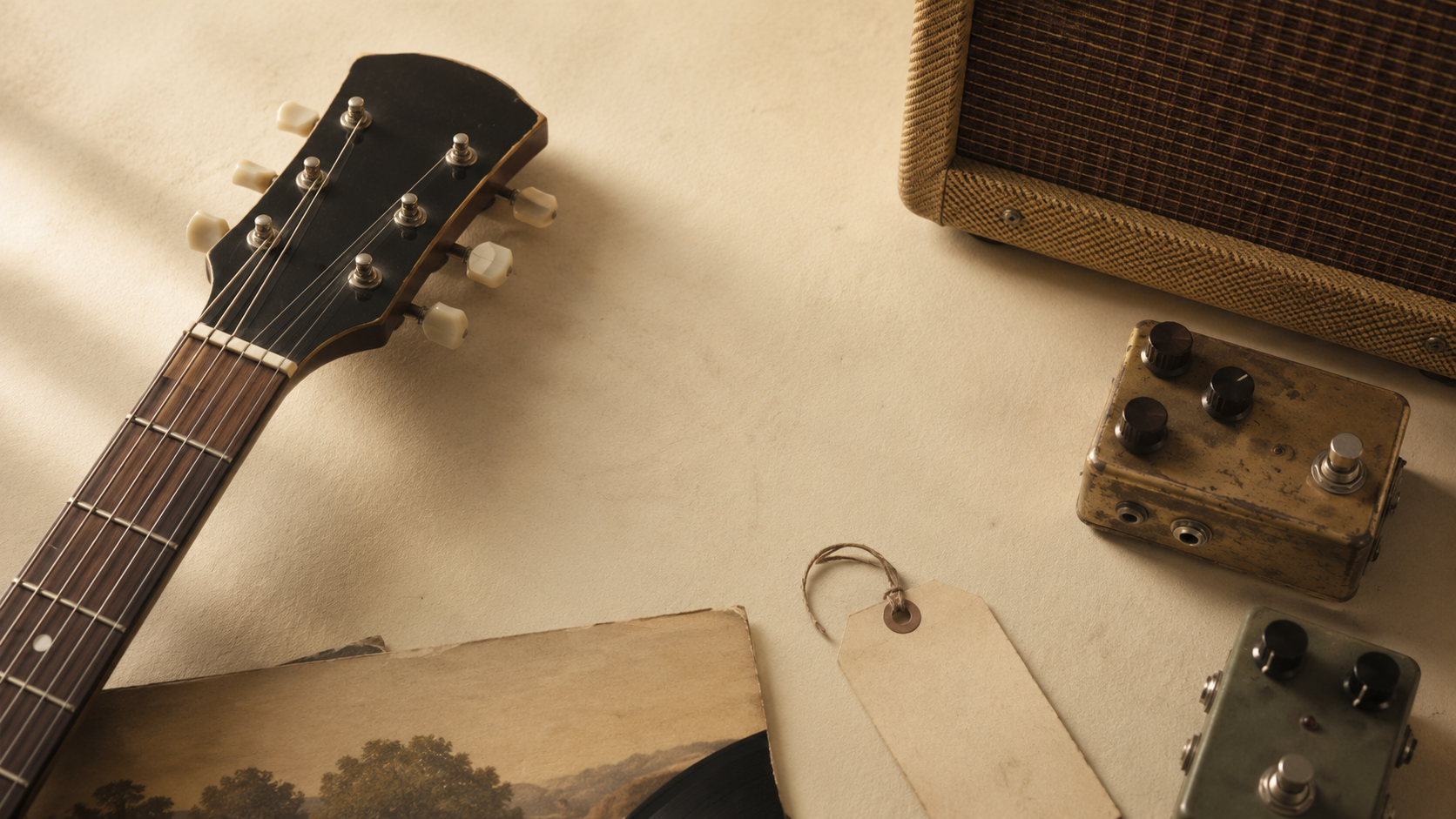
Alludio is a small collection of instruments, amps, pedals, records, and other objects that earned attention.


Not because they are the most expensive thing in the room. Not because they fit neatly into a category. Because they have feel. Because they sound right. Because they carry a story, a useful design, a forgotten reputation, or the kind of strange value that gets missed when everything is reduced to a brand name and a price.
Alludio is intentionally small. The collection is not built from wholesale inventory or endless product categories. It grows when something worth noticing turns up.
That might be a Japanese semi-hollow, a Korean Squier from a confusing transition era, a small Fender amp with real spring reverb, a useful pedal, a sealed record, a local piece of merch, or an object that simply belongs in the same world.
Some pieces are available. Some are story pieces. Some may stay in the collection because the point is not only selling inventory. It is documenting taste.

A piece does not need to be rare to be interesting. It needs to have a reason.
Does it do something useful, musical, or hard to fake?
Does it make you want to keep playing, wearing, holding, or using it?
Is there an era, factory, design choice, repair, modification, or strange market gap worth explaining?
Is it overlooked, misread, under-documented, or better than its reputation?
Does it have the visual character to belong in a curated collection?
Alludio listings are meant to be useful, not vague.
When a piece can be tested, it is checked. When country of origin, era, model, factory, speaker, circuit, condition, or originality can be identified, that information is documented. When something is unknown, modified, imperfect, or still being researched, that should be clear too.
The goal is simple: make the listing more helpful than the average used-gear post.

Prior marketplace experience
Alludio is a new storefront built on an old habit: finding worthwhile things, describing them honestly, and making the transaction easy.
Before Alludio, I bought and sold gear, records, furniture, and local finds through marketplace transactions. That history now shapes how Alludio works: clear descriptions, honest condition notes, responsive communication, and no surprise issues at pickup or delivery.

A surprising amount of interesting gear has little or no useful documentation online. Some pieces have no good demos. Some are mislabeled. Some are written off because the name on the front does not tell the full story.
Alludio adds value by showing the object clearly: what it is, what it might be, what it sounds like, and why someone might care.
The journal and demo archive are part of the shop, not separate from it. They are how the collection explains itself.
Available pieces can be purchased directly when checkout is configured. For anything that needs a more human answer: condition questions, local pickup, trades, bundles, shipping concerns, or a piece that is not currently listed for direct purchase, you can still ask about it.
Alludio is small enough that the buying process should feel direct, careful, and personal. The goal is not to rush someone through a generic cart. The goal is to make sure the piece and the buyer make sense together.
Buy Now when available. Ask about it when a conversation makes more sense.
Browse the current pieces, read the journal, or ask about something that caught your eye.